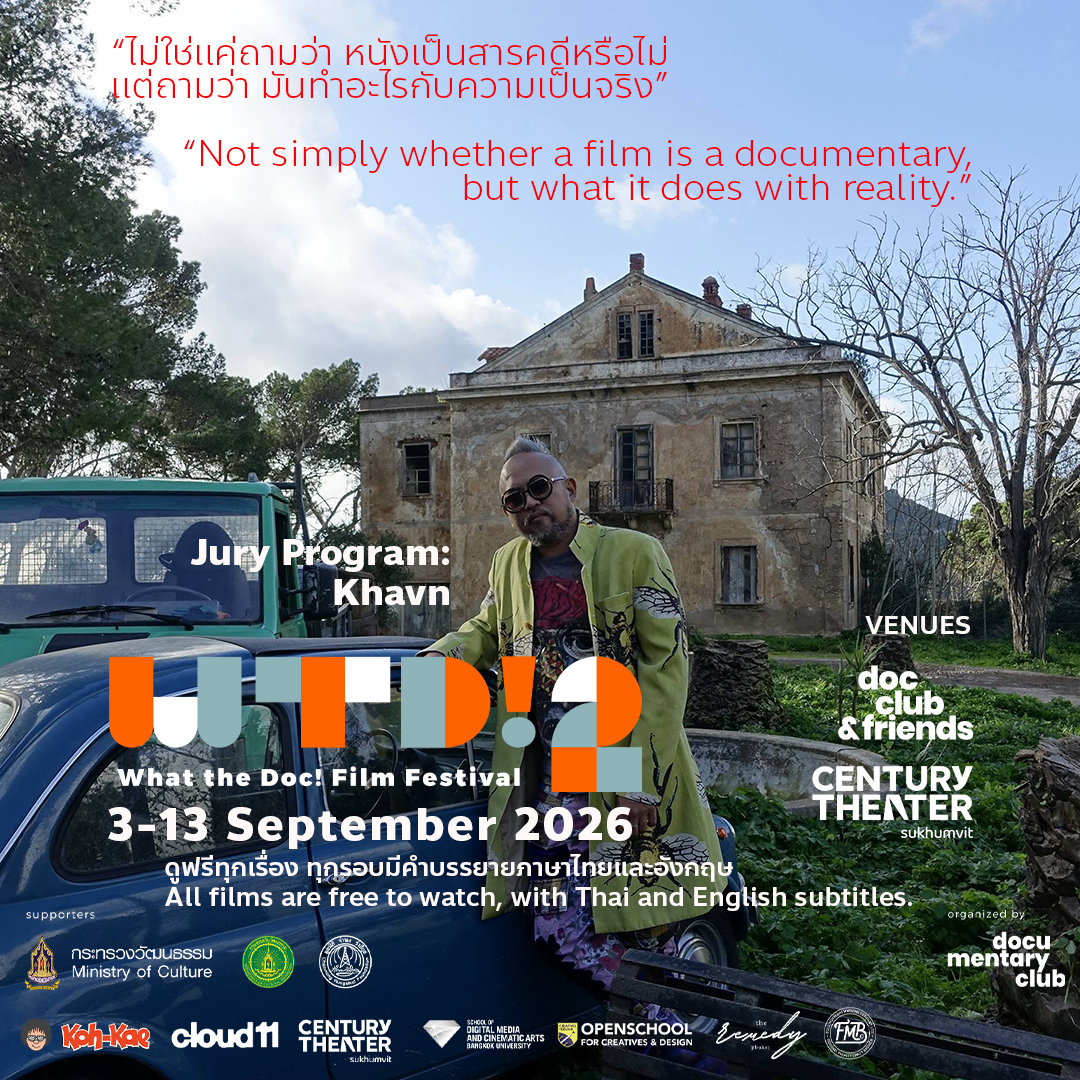
Jury Program: Khavn เมื่อหนังที่ไม่ใช่สารคดี ถูกฉายในเทศกาลสารคดี
ในเทศกาลภาพยนตร์สารคดี การเชิญกรรมการคนหนึ่งมาแล้วฉายผลงานที่ไม่ได้เป็น “สารคดี” ทั้งหมด อาจดูเหมือนเป็นความย้อนแย้ง แต่ถ้าคนคนนั้นคือ Khavn ความย้อนแย้งแทบจะเป็นจุดเริ่มต้นที่เหมาะสมที่สุด เพราะตลอดกว่าสามทศวรรษที่ผ่านมา ศิลปินชาวฟิลิปปินส์ผู้นี้ใช้ชีวิตอยู่บนเส้นแบ่งที่เขาเองไม่ค่อยเชื่อว่าจำเป็นต้องมีอยู่จริง ระหว่างสารคดีกับเรื่องแต่ง ระหว่างภาพยนตร์กับคอนเสิร์ต ระหว่างประวัติศาสตร์กับภาพหลอน ระหว่างความยากจนที่เกิดขึ้นจริงกับโลกเหนือจริงที่หยาบคาย ตลกร้าย และนองเลือดจนเกือบเหมือนการ์ตูน
ถ้า Alipato เป็นเรื่องแต่งพังก์ ถ้า Balangiga เป็นภาพยนตร์ประวัติศาสตร์ที่ใช้จินตนาการเหนือจริง และ Makamisa เป็นฟิล์มเงียบปลอมที่สร้างจดหมายเหตุสมมติขึ้นมา เหตุใดสามเรื่องนี้จึงเหมาะจะอยู่ในเทศกาลสารคดี คำตอบอาจอยู่ที่ว่า “สารคดี” ไม่จำเป็นต้องเท่ากับการบันทึกสิ่งที่เกิดขึ้นต่อหน้ากล้องเสมอไป สิ่งที่สารคดีพยายามต่อรองคือความสัมพันธ์ระหว่างภาพกับโลกจริง ระหว่างหลักฐานกับความทรงจำ ระหว่างคนที่มีอำนาจเล่ากับคนที่ถูกเล่า
สามเรื่องของ Khavn ทำงานกับความจริงชนิดนั้นโดยตรง Alipato เอาความจริงเรื่องความเหลื่อมล้ำและความรุนแรงในเมืองไปยืดจนเป็นนิยายอนาคต Balangiga เอาเหตุการณ์ประวัติศาสตร์จริงมาผ่านสายตาเด็กและภาษาหลอนเพื่อขัดขืนการเล่าแบบผู้ชนะ ส่วน Makamisa ยอมรับตั้งแต่ต้นว่ามัน “ปลอม” จดหมายเหตุขึ้นมาเพื่อชี้ให้เห็นว่า “ความว่างเปล่า” ในหอจดหมายเหตุเองก็เป็นข้อเท็จจริงทางประวัติศาสตร์
ไม่ใช่แค่ถามว่าหนังเป็นสารคดีหรือไม่ แต่ถามว่ามันทำอะไรกับความเป็นจริง มันทำให้ผู้ชมเห็นประวัติศาสตร์อีกแบบหรือไม่ มันทำให้คนที่เคยอยู่ริมขอบภาพกลับเข้ามามีเสียงได้หรือไม่ และมันกล้าเสี่ยงกับภาษาของตัวเองพอหรือยัง
WTD! 2026 ชวนชม 3 ภาพยนตร์ฟิกชั่นโดย Khavn หนึ่งในกรรมการสายสารคดีนานาชาติและสารคดีสั้นปีนี้
-
เรื่องแต่งพังก์ที่ยืดความจริงเรื่องความเหลื่อมล้ำและความรุนแรงในเมืองออกไปจนกลายเป็นนิยายอนาคต
-
เหตุการณ์ประวัติศาสตร์จริงที่ผ่านสายตาเด็กและภาษาหลอน เพื่อขัดขืนการเล่าแบบผู้ชนะ
-
ฟิล์มเงียบปลอมที่สร้างจดหมายเหตุสมมติขึ้นมา เพื่อชี้ว่าความว่างเปล่าในหอจดหมายเหตุเองก็เป็นข้อเท็จจริงทางประวัติศาสตร์
เนื้อหาส่วนนี้ตัดตอนจากบทความในเว็บไทยพับลิก้า
Jury Program: Khavn
At a documentary film festival, inviting a juror and then screening works of theirs that are not all “documentaries” might seem contradictory. But when that person is Khavn, contradiction is perhaps the most fitting place to begin. For more than three decades, the Filipino artist has lived and worked along boundaries whose necessity he has never seemed particularly interested in accepting: between documentary and fiction, cinema and concert, history and hallucination, real-world poverty and a surreal universe that is crude, darkly comic, and so blood-soaked it can almost feel like a cartoon.
If Alipato is a punk fiction, Balangiga a historical film shaped through surreal imagination, and Makamisa a fake silent film built from invented archival material, why do these three films belong in a documentary film festival?
Perhaps the answer lies in the idea that “documentary” does not necessarily mean simply recording what happens in front of the camera. What documentary continually negotiates is the relationship between images and the real world, between evidence and memory, between those who have the power to tell and those who are being told about.
Khavn’s three films work directly with this kind of truth. Alipato takes the realities of urban inequality and violence and stretches them into a futuristic fiction. Balangiga takes an actual historical event and filters it through a child’s perspective and a hallucinatory cinematic language, resisting history as told by the victors. Makamisa, meanwhile, openly admits from the outset that it “fakes” an archive in order to reveal that the very “emptiness” within the archive is itself a historical fact.
The question, then, is not simply whether a film is a documentary, but what it does with reality. Can it make us see history differently? Can it return a voice to those who have long remained at the margins of the frame? And is it willing to take enough risks with its own cinematic language?
WTD! 2026 invites you to discover three fiction films by Khavn, one of this year’s jurors for the International Documentary Competition and the Short Doc Awards Selection.
This text is excerpted from an article published by Thai Publica.